Page
1 Page
2 Page
3 Page
4 Page
5 Page
6 Page
7 Page
8 Page
9
Page
10 Page
11 Page
12 Page
13 Page
14 Page
15 Page
16 Page
17 Page
18
Page
19 Page
20 Page
21 Page
22 Night
Driving (23) Making
Tires (24) Brass
Chassis (25)
Switching Scales (26) Routed
HO (27) Rails
Installed (28) Oval
Action (29)
New
1/32 Beginning (30) Construction
(31) Routing
(32) Painting
and Taping
(33) Power Taps
and Timing
(34)
Up and Running (35) Scenery
(36) More Slot
Racing (37)
Another long day when it seemed so near. I checked all taps under the table
with an ohm meter. I simply used a metal screw
the under side, through the copper foil. I attached jumper
cables with soldered ends (those red and blue little circle
connectorson each end). This way
I am able to remove the power tap section from the top of the table and not
have to go
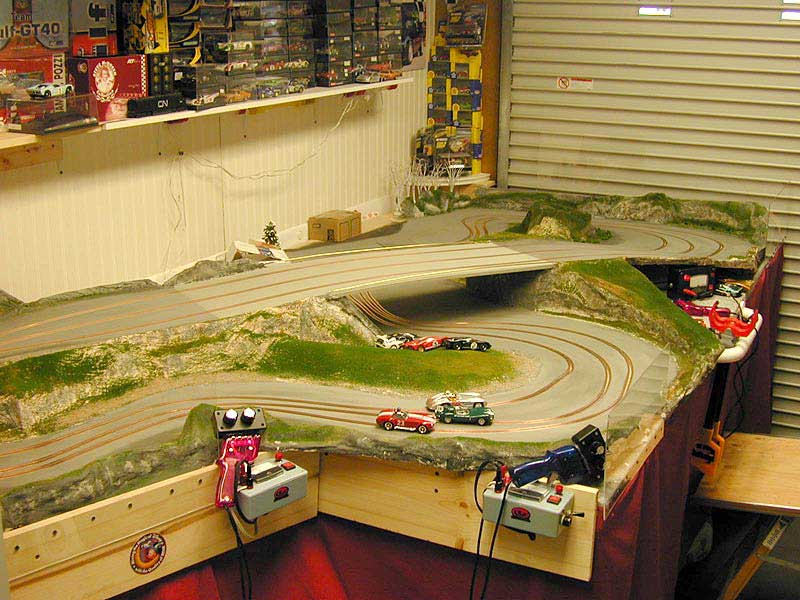
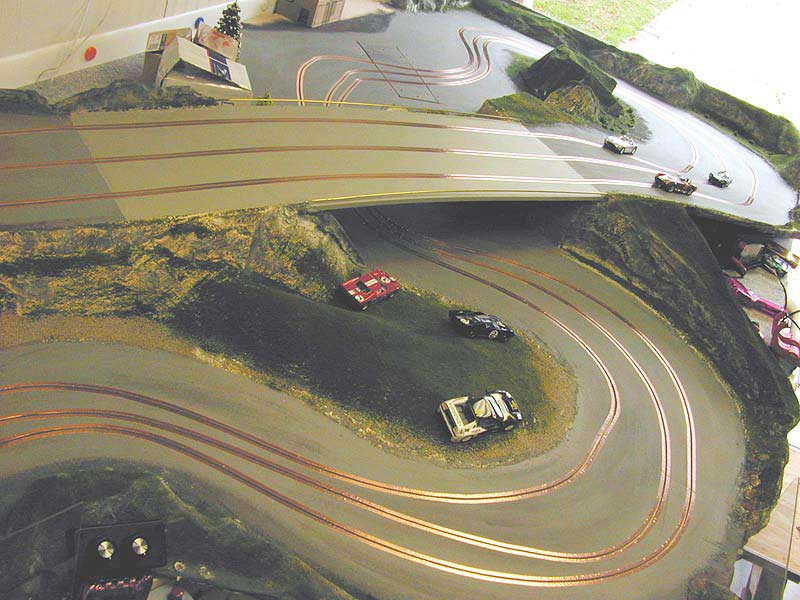
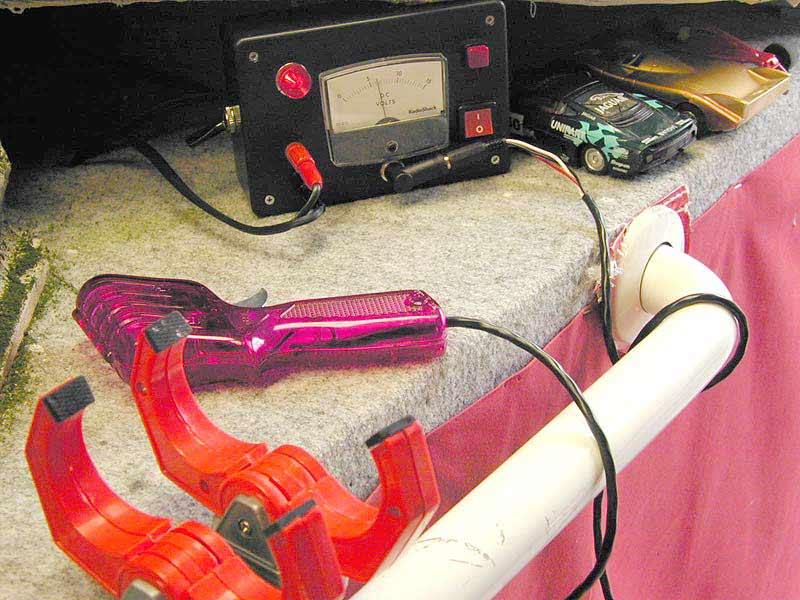
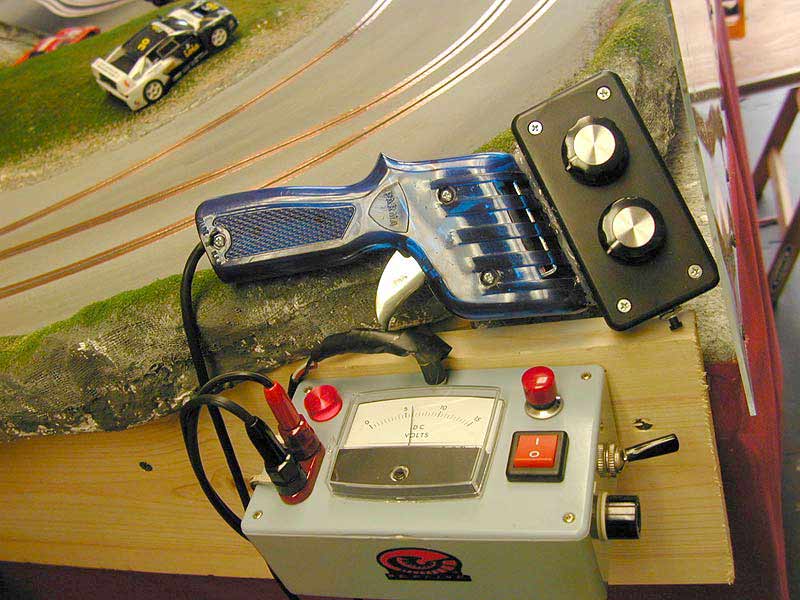
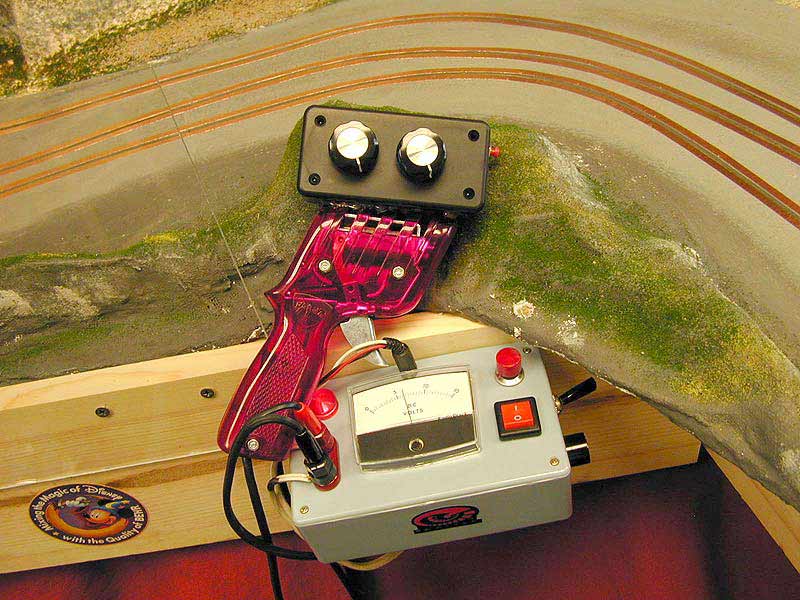
underneath. In my rush to test the track, I fired up the variable power
supply to a modest 12 volts and on about the third
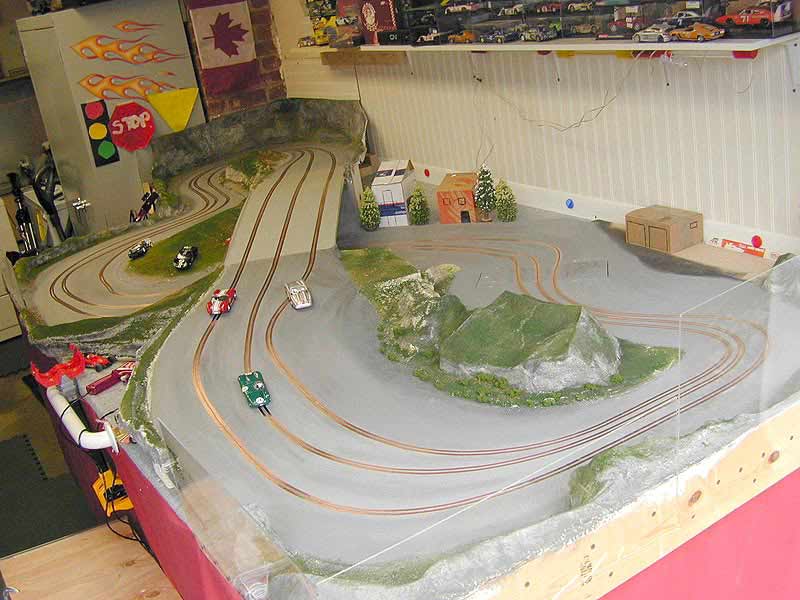
lap I launched my precious #1 GT40 off of the overpass and into the pavement
- outside of the garage! Let's just say power is
not a problem on this track! Amazingly, the car landed on its metal spoiler
and then on its tires - only the spoiler, the rear
window and one of the rear metal screens came off. Wow. I thought that
was good enough of a reason to add the plexiglass
retaining walls.
I am discovering that only about 6-10
volts is required for many of the cars to allow for competitive racing.
When newcomers
come over, if they use my cars instead of there own, they will start at
6 volts. I never realized how fast a wood track can be. I am still
in
awe. I
screwed all the driver's stations into position, and felt the one under
the underpass
was a
decent spot as far
as location goes.
I'll update this write up in a little while, time to get back on the track
to work on a ton of cars! Don't miss the last pages.